Parish: Westmoreland Seaford Town stands as a unique testament to Jamaica’s post-emancipation history, emerging in the wake of the abolition of slavery on August 1, 1834. As plantations faced an impending shortage of labor, several solutions were proposed to fill the gap. One such measure was initiated by Lord Seaford, the then-owner of Montpelier Estate and Shettlewood Pen, located in St. James....
Woodside, located in the parish of St. Mary, is a community steeped in history, with deep connections to the Taíno, the plantation era, and Jamaica's emancipation. This village is home to remarkable sites, including the prehistoric petroglyphs at Dryland, also known as "One/Long Bubby Susan." These rock carvings, the oldest known on the island, are found in a cave in Woodside, known as Rock Spring. These...
Nanny Town, perched high on Nanny Town Hill at 2,000 feet above sea level in the shadow of the majestic Abraham mountain, was a formidable Maroon citadel and one of the most renowned settlements of the Maroons. Its strategic location served as a natural fortress, impenetrable to outsiders and ideal for defense. Built intentionally to withstand invasions, it provided sanctuary for escaped slaves seeking...
Moore Town, nestled in the lush hills of Portland, stands as a testament to the resilience and ingenuity of the Maroons. Emerging from the peace treaty signed in 1739 between Cudjoe, Nanny’s brother, and the British, Moore Town embodies the hard-won freedom of Jamaica’s Maroon communities. While Cudjoe’s treaty marked the first official recognition of Maroon autonomy, Nanny initially resisted but...
Flagstaff, located in St. James, is a historic Maroon community that played a pivotal role during the Second Maroon War of 1795. Following the war, it became a military settlement, and by 1838, the site was home to fifty-nine buildings, solidifying its place in Jamaica’s colonial history. This location offers a remarkable glimpse into the resilience and ingenuity of the Maroons and their lasting impact...
Charles Town, near Buff Bay in Portland, is a historic Maroon settlement established around 1754 and officially named in 1832, previously known as New Crawford Town. Unlike other Maroon communities hidden in mountain valleys, Charles Town is located on the coastal plains, making it more accessible while preserving its rich cultural heritage. It is one of Jamaica's four major Maroon settlements, alongside...
Accompong, located in the lush and verdant hills of St. Elizabeth, Jamaica, is a village steeped in history and rich cultural heritage. Named after its founder Accompong, the village pays homage to one of the prominent leaders of the Maroon resistance. Accompong was the brother of renowned warriors Quao, Cuffy, Cudjoe, and Nanny—heroic figures of the Ashanti lineage from West Africa who played pivotal...
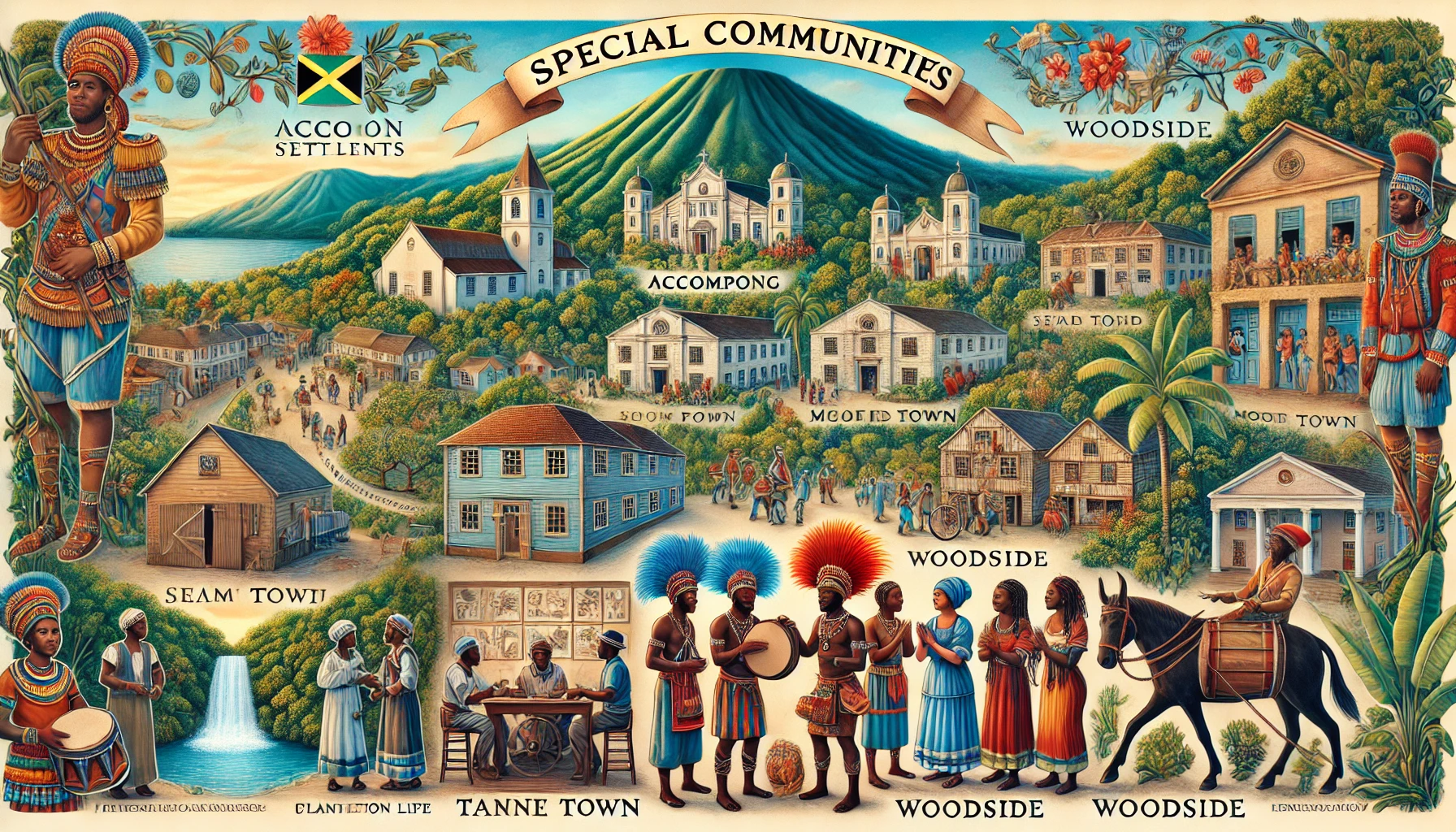
Special communities in Jamaica hold a unique place in the nation’s history, formed under distinct and often challenging circumstances, showcasing resilience, cultural preservation, and heritage. Among these are the Maroon communities, established following the signing of a peace treaty with the British in 1739, which granted the Maroons land and autonomy. Principal settlements such as Accompong in St....